
The acquisition was complete, the systems were connected, and operations were moving forward as planned. Then, unusual network activity appeared across multiple facilities. What seemed like a routine IT issue quickly turned out to be unauthorized access through an outdated account inherited from the acquired company.
This scenario highlights a common challenge during mergers and acquisitions. While manufacturers focus on integrating systems and maintaining operations, cybersecurity gaps can emerge as new users, applications, and infrastructure are brought together.
A successful integration requires more than connecting technology. It requires protecting business-critical systems, sensitive data, and production environments from day one. By making cybersecurity part of the integration strategy, manufacturers can reduce risk and strengthen long-term business resilience.
Why Cybersecurity Becomes More Complex During M&A
Every acquisition introduces new technology, users, devices, applications, and infrastructure into the existing environment. Even when both organizations maintain strong security practices independently, combining two different IT ecosystems creates new risks that require careful planning.
Common challenges include:
- Legacy systems that no longer receive security updates.
- Different identity and access management policies.
- Unknown third-party software and vendor connections.
- Inconsistent cybersecurity procedures.
- Duplicate or unnecessary user accounts.
- Different backup and disaster recovery processes.
Without a structured cybersecurity strategy, these differences can increase the organization’s attack surface and expose critical manufacturing operations to unnecessary risk.
Hidden Security Risks That Are Often Overlooked
Many cybersecurity vulnerabilities are not immediately visible during an acquisition. They may exist inside systems that appear to function normally but contain outdated configurations or excessive user permissions.
Manufacturers should pay particular attention to:
- Former employee accounts that remain active.
- Shared administrator credentials.
- Unsupported operating systems.
- Unpatched ERP or MES environments.
- Connected production equipment with outdated firmware.
- Third-party applications that have broad system access.
Identifying these risks early helps prevent security incidents after integration begins.
The Role of Cyber Due Diligence Before Integration
Many cybersecurity issues can be avoided before systems are ever connected. A thorough cyber due diligence process gives manufacturers a clear understanding of the acquired company’s technology environment, helping identify vulnerabilities before they become business disruptions.
Rather than waiting until integration begins, IT teams should evaluate the security posture of both organizations early in the transaction. This allows decision-makers to prioritize remediation efforts, allocate resources effectively, and reduce operational risk throughout the integration process.
Key areas to evaluate include:
- Identity and access management policies.
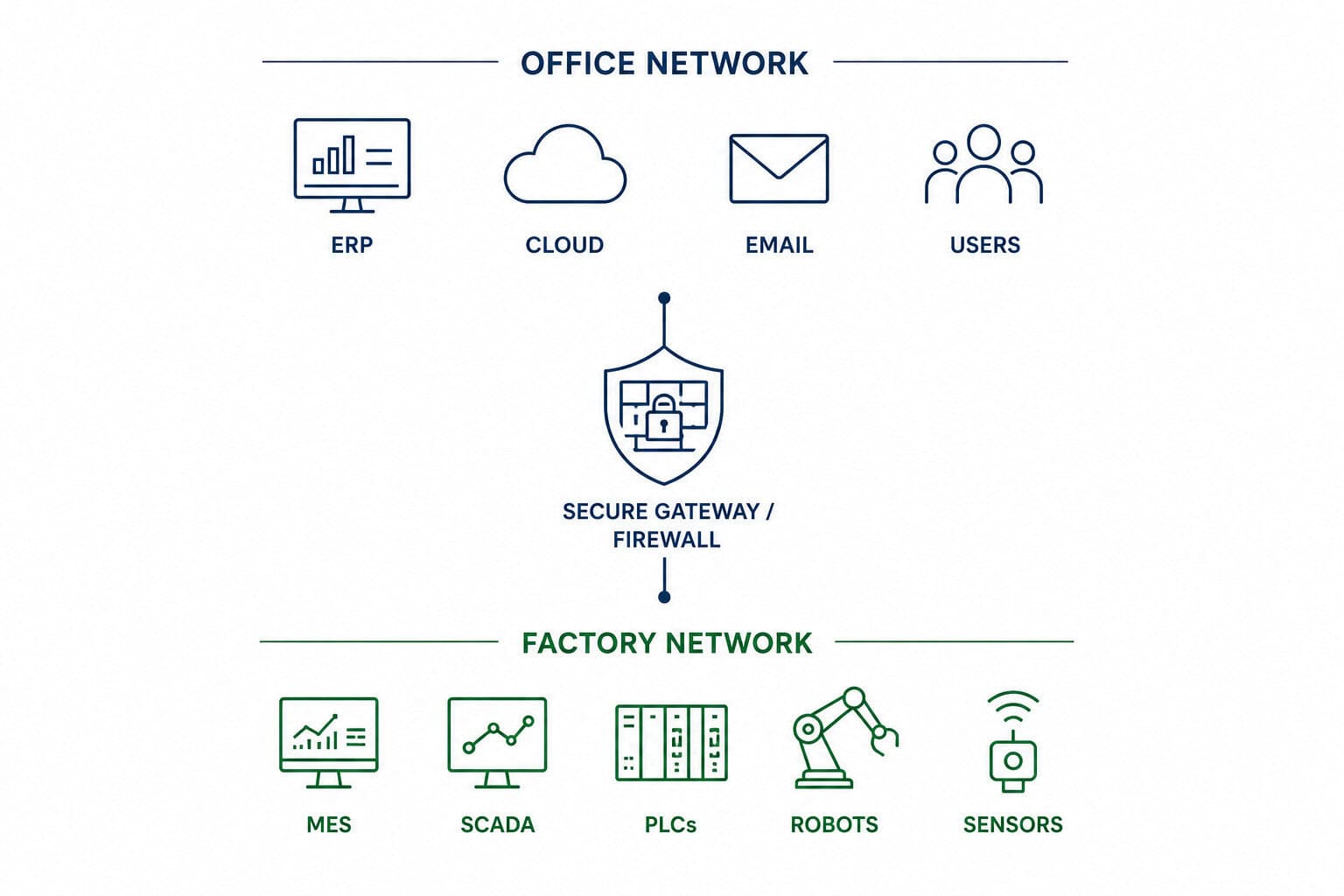
- Network architecture and segmentation.
- Endpoint protection and monitoring tools.
- ERP, MES, and business-critical applications.
- Third-party software and vendor access.
- Backup, disaster recovery, and incident response plans.
Cyber due diligence also provides valuable documentation that supports compliance, improves integration planning, and reduces unexpected security challenges after the acquisition closes.
For a more detailed framework on evaluating technology environments before an acquisition, read our guide on IT Due Diligence & Integration Checklist for Manufacturers.
Cybersecurity Best Practices for Manufacturing M&A
A successful cybersecurity strategy goes beyond identifying risks. Manufacturers need a structured plan that protects both IT and operational environments before, during, and after the integration. Establishing consistent security standards early helps reduce disruption, strengthen visibility, and maintain business continuity.
Key cybersecurity best practices include:
- Implement multi-factor authentication (MFA) for all critical systems.
- Review and remove unnecessary user accounts before integration.
- Apply security patches to ERP, MES, and business-critical applications.
- Restrict third-party vendor access using least-privilege principles.
- Segment production and corporate networks where appropriate.
- Continuously monitor systems for unusual activity throughout the integration process.
Together, these practices help manufacturers reduce cybersecurity risks while building a more secure and resilient technology environment.
Protecting Operational Technology (OT) During Integration
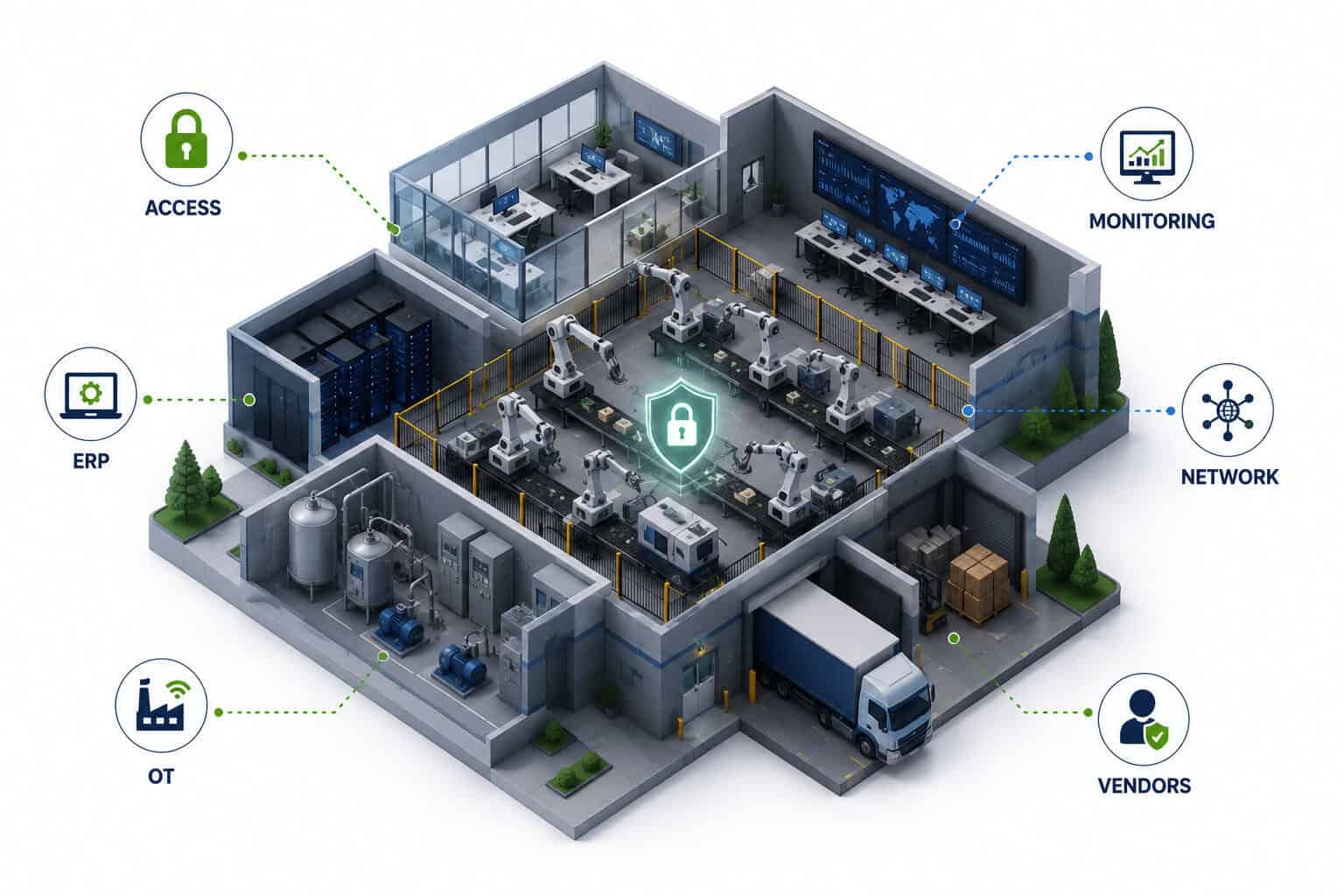
Unlike traditional IT systems, operational technology (OT) directly supports manufacturing equipment, industrial control systems, and production processes. A cybersecurity incident affecting OT can disrupt operations, impact product quality, and create safety concerns across the facility.
As IT and OT environments become more connected during an acquisition, protecting these systems should remain a priority. Manufacturers should focus on reducing unnecessary exposure while maintaining operational continuity.
Key recommendations include:
- Maintain separation between IT and OT networks whenever possible.
- Inventory industrial devices before integration.
- Limit remote access to authorized personnel only.
- Keep supported firmware and security settings up to date.
- Monitor industrial networks for unusual activity.
Protecting OT alongside traditional IT infrastructure helps reduce operational risk throughout the integration process.
Incident Response and Continuous Monitoring During Integration
Even with strong preventive controls, organizations should be prepared to respond quickly if security incidents occur during integration. Clear response procedures help reduce downtime, contain threats, and support business continuity.
Manufacturers should establish an incident response plan that defines responsibilities, communication procedures, and recovery priorities. Continuous monitoring also improves visibility into system activity, making it easier to detect unusual behavior before it affects operations.
Key practices include:
- Monitor network and endpoint activity.
- Configure alerts for suspicious events.
- Test backup and recovery procedures.
- Document incidents and corrective actions.
Rapid detection and response can significantly reduce the impact of cybersecurity events during an acquisition.
Building a Long-Term Cybersecurity Strategy After the Acquisition
Cybersecurity should continue long after the integration is complete. As technology environments evolve, manufacturers should regularly review their security posture to address emerging risks and changing business requirements.
A long-term strategy should include:
- Regular security assessments.
- Periodic access reviews.
- Ongoing employee cybersecurity training.
- Routine software and firmware updates.
- Continuous improvement of security policies.
Treating cybersecurity as an ongoing business strategy helps manufacturers strengthen resilience while supporting future growth.
Where Unstoppable Fits In
Manufacturing mergers often involve more than combining business operations—they require securely integrating complex technology environments. At Unstoppable Software, we help manufacturers plan and execute IT integrations with security, operational continuity, and long-term scalability in mind.
Whether you’re evaluating an acquisition, modernizing legacy systems, or preparing your infrastructure for future growth, our team can help you reduce integration risks while building a stronger technology foundation.
Final Takeaway
Cybersecurity plays a critical role in every stage of a manufacturing acquisition. From evaluating risks before integration to protecting operational technology and maintaining long-term security practices, a structured approach helps reduce disruption and strengthen business resilience.
By making cybersecurity part of the overall M&A strategy, manufacturers can integrate technology with greater confidence while supporting secure, reliable operations for the future.