
Ask three departments for the same production number, and you might get three different answers.
Production pulls data from the MES. Finance relies on the ERP. Someone else has a spreadsheet they’ve been updating manually for months. Each source tells part of the story, but none provides the complete picture.
I’ve seen manufacturers invest heavily in technology and still struggle to answer basic operational questions. It’s rarely because they don’t have enough software. More often, their systems were implemented at different times, built around different priorities, and never properly connected.
That’s where the idea of a single source of truth becomes important.
But building one doesn’t necessarily mean moving everything into a new platform. It means understanding which systems should own which data, how that information moves between them, and what needs to happen before people can confidently rely on it.
For manufacturers, getting those decisions right is often more valuable than adding another piece of so
What Is a Single Source of Truth in Manufacturing?
A single source of truth (SSOT) is a way of organizing and managing information so that everyone in a company works from consistent, reliable data.
In manufacturing, that can mean making sure production quantities, inventory levels, material consumption, and quality records are accurately reflected across the systems that need them.
One distinction I think is important: a single source of truth doesn’t have to be a single database.
An ERP might be responsible for purchasing and financial records, while an MES captures what actually happens on the production floor. A laboratory information management system (LIMS) may hold quality test results. Each system serves a different purpose, and there’s no reason to force all that functionality into one application.
What matters is establishing which system is authoritative for each type of information and ensuring that changes are communicated accurately to the others.
When that foundation is in place, teams can work with a consistent understanding of operations without having to manually reconcile conflicting reports.
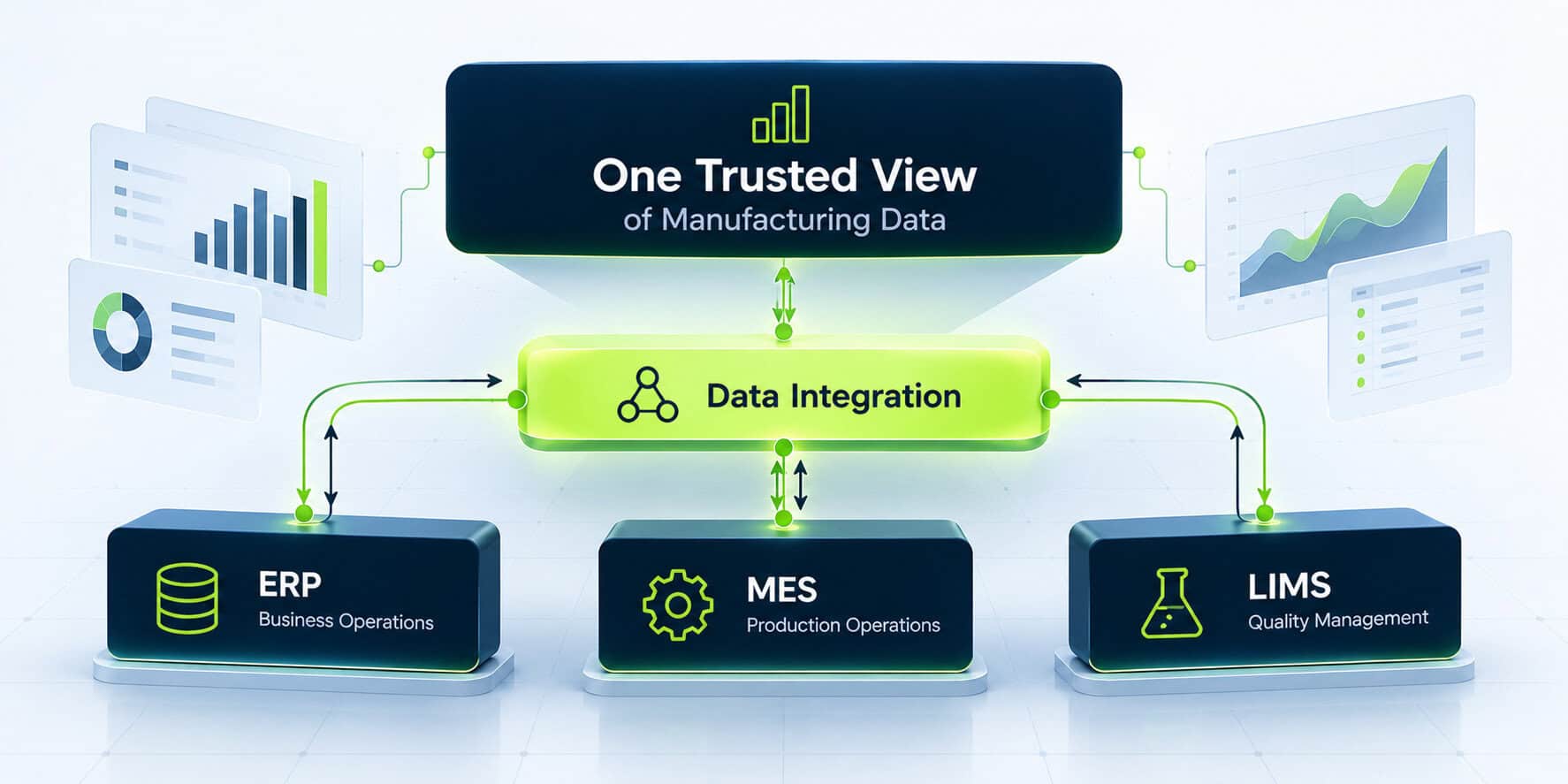
| ERP, MES, and LIMS exchange information through a data integration layer, creating a consistent, trusted view of manufacturing operations while each system maintains its own responsibilities. |
Why Manufacturing Data Becomes Disconnected
Manufacturing systems rarely arrive all at once. An ERP might have been implemented ten years ago, an MES added during a production expansion, and a quality management application introduced to meet new compliance requirements.
Each system solves a legitimate problem. The challenge comes when they need to work together.
I’ve seen a few recurring issues behind disconnected manufacturing data:
- Different definitions of the same metric. Production may count completed units when they leave the line, while finance records them after a separate transaction. Both numbers can be accurate within their own context but difficult to reconcile.
- Manual transfers between systems. Employees export reports, update spreadsheets, or reenter information because applications don’t communicate directly. Every additional step introduces opportunities for delays and errors.
- Legacy integration limitations. Older equipment and software may rely on proprietary formats, limited APIs, or interfaces that weren’t designed for modern data exchange.
- Unclear data ownership. When multiple systems can update the same record, conflicting values can emerge without an agreed-upon source of authority.
These issues often develop gradually. A workaround that makes sense for one department can become a dependency for the entire operation.
That’s why identifying where information originates, how it changes, and who is responsible for it should come before choosing an integration solution.
How to Build a Single Source of Truth in Manufacturing
Building a single source of truth requires more than connecting software. Manufacturers need to understand where their data comes from, who owns it, and how it moves across operations.
Here’s how I would approach it.
1. Identify Your Critical Data
Start with the information that directly affects operations, such as production orders, inventory, material consumption, and quality records. Map where that data originates, which systems depend on it, and where inconsistencies occur.
Focus on the areas causing the most operational friction rather than trying to integrate everything at once.
2. Establish Clear Data Ownership
Determine which system is responsible for each type of information.
For example, an MES may capture actual material consumption, while the ERP manages purchasing and inventory transactions. Clear ownership prevents conflicting updates and helps teams identify which records to trust.
3. Standardize Data Definitions
Connected systems can still produce inconsistent reports when departments calculate metrics differently.
Establish shared definitions for production output, scrap rates, inventory availability, and batch status. This becomes especially important across multiple production lines or facilities.
4. Connect Systems Around Business Processes
With data ownership established, integrate systems using the approach that fits your infrastructure, whether that’s APIs, middleware, or custom software connecting legacy applications.
Prioritize accurate information exchange and reliable synchronization over simply moving as much data as possible.
5. Validate and Maintain Your Data
Integrations need validation rules, error monitoring, and clear processes for resolving discrepancies.
As operations evolve, data definitions and integrations need to evolve with them. A single source of truth requires ongoing maintenance to remain reliable.
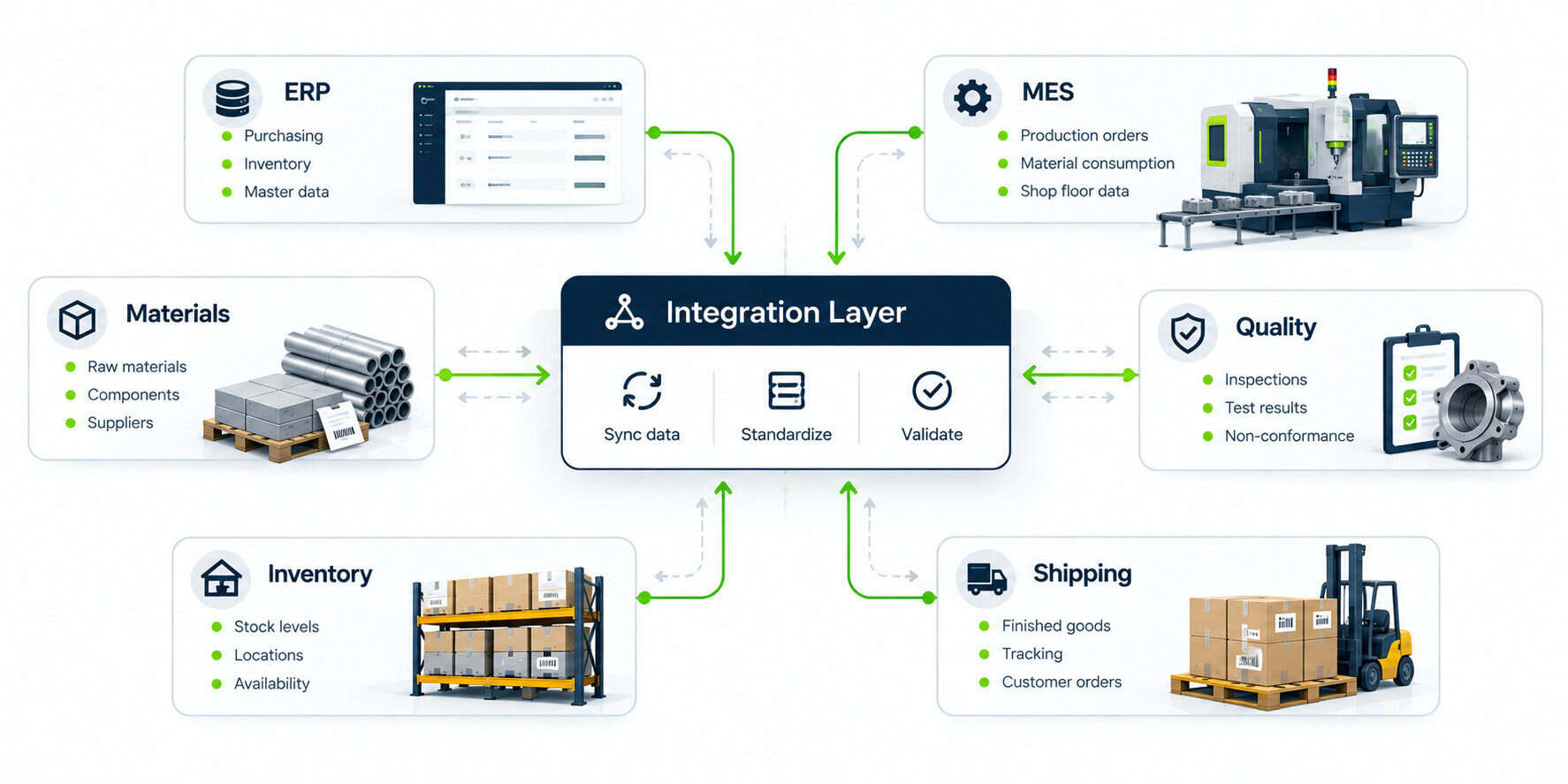
| A conceptual view of how an integration layer connects manufacturing systems and operational data, supporting consistent information exchange, standardization, and validation. |
A Real-World Example: Connecting Manufacturing Data at the Source
A good example comes from a project we completed for an automotive adhesive manufacturer.
The company relied on paper-based processes to manage ingredient weighing and production records, making it difficult to verify material usage and maintain visibility across operations.
We built a custom Manufacturing Execution System (MES) that integrated with its existing ERP, Labsoft LIMS, and production equipment. This connected material verification, inventory information, quality records, and production reporting within a more consistent workflow.
What makes this project relevant is that we didn’t need to replace every existing system. We connected the information manufacturers needed while allowing each application to serve its intended purpose.
You can explore the full project in our automotive adhesive manufacturing case study.
How a Single Source of Truth Improves Manufacturing Decisions
The real value of a single source of truth becomes clear when manufacturers can act on information without spending hours reconciling it.
Consider a production manager investigating an unexpected increase in scrap. If production records, material consumption, and quality results are connected, the team can identify patterns across batches rather than comparing separate spreadsheets.
The same principle applies to inventory planning. When actual material usage is accurately reflected in inventory records, purchasing teams can make better decisions about replenishment and avoid relying on outdated estimates.
There’s also a longer-term benefit that often gets overlooked: better data creates a stronger foundation for analytics and AI.
Predictive maintenance, demand forecasting, and production optimization all depend on reliable information. Advanced tools won’t solve inconsistent definitions or inaccurate source records.
For manufacturers considering AI investments, getting their data architecture right is a practical place to start.
Common Mistakes to Avoid When Building a Single Source of Truth
One mistake I often see is manufacturers treating a single source of truth as a software purchasing decision rather than a data management challenge.
Even with the right technology, a few missteps can undermine the results:
- Integrating everything at once. Connecting every application before identifying business priorities can increase complexity without solving the most pressing problems.
- Ignoring data quality. Synchronizing inaccurate or outdated records simply spreads those problems across more systems.
- Overlooking the people using the data. Operators, engineers, and managers need to understand how information is captured, updated, and interpreted.
- Treating integration as a one-time project. Changes in equipment, workflows, and software require ongoing attention to keep information reliable.
My advice is to start with a specific operational problem, establish what accurate data should look like, and build outward from there.
A smaller integration that people trust is more valuable than a large system nobody feels confident using.
How to Measure the Success of a Single Source of Truth
A successful integration shouldn’t be measured by how many systems are connected. It should be measured by how much more reliable and useful the information becomes.
I recommend looking at a few practical indicators:
- Data discrepancies: Are production, inventory, and financial records becoming more consistent?
- Reconciliation time: How much time do employees spend comparing reports or correcting conflicting information?
- Data availability: Can teams access the information they need when decisions have to be made?
- Integration reliability: Are records synchronizing correctly, and are errors being detected before they affect operations?
Establish a baseline before implementing changes, then monitor these indicators over time.
The objective isn’t perfect data overnight. It’s a measurable improvement in how confidently teams can use information across the business.
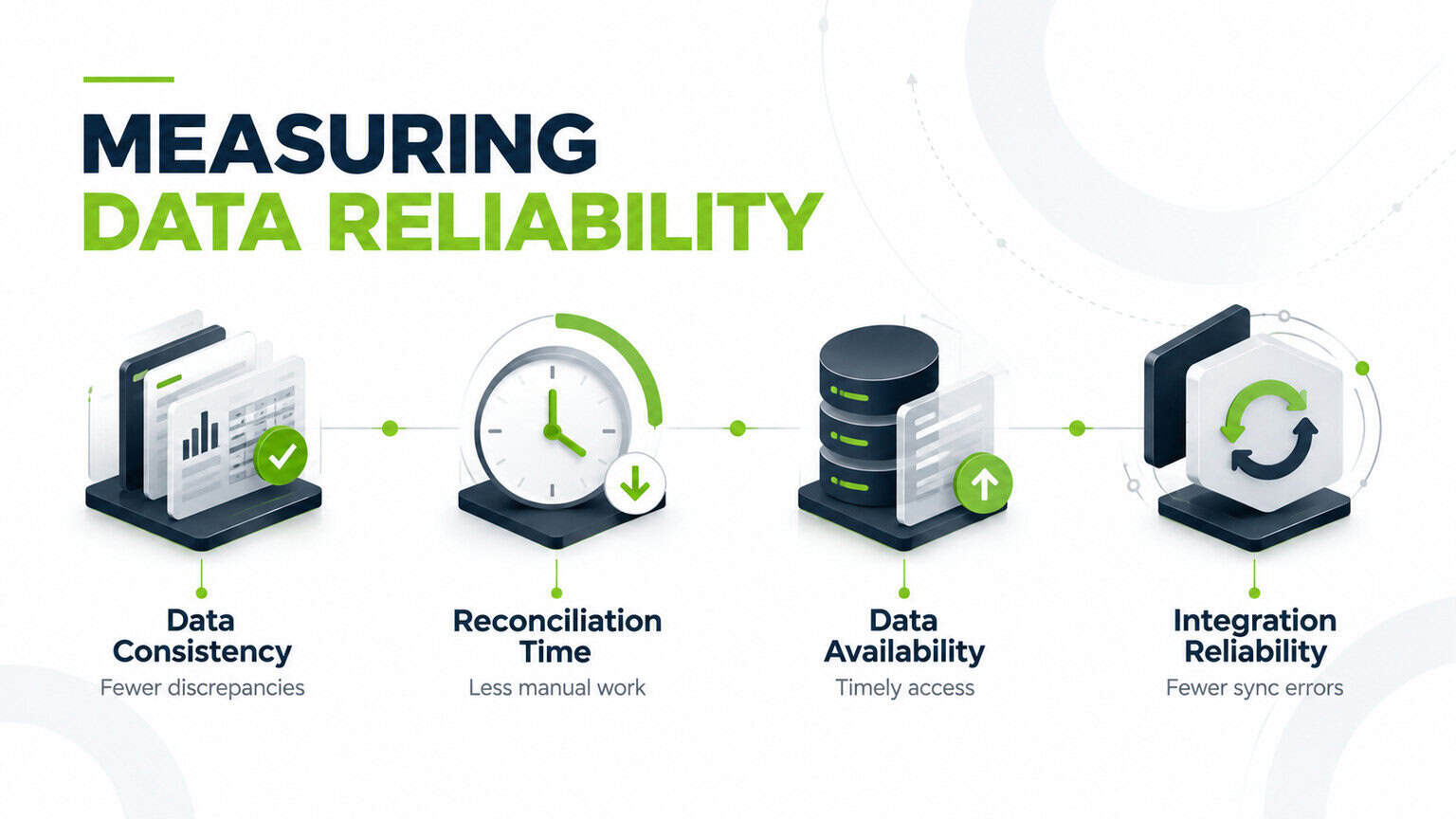
| Infographic showing four manufacturing data reliability metrics: data consistency, reconciliation time, data availability, and integration reliability. |
Where Unstoppable Fits In
At Unstoppable Software, we help manufacturers connect ERP, MES, legacy equipment, and other critical systems through custom software and integrations.
We focus on solving operational challenges, improving data reliability, and making existing technology work better together without unnecessary complexity.
| Final TakeawayA single source of truth starts with clear data ownership, reliable integrations, and consistent information across manufacturing operations.Start with your biggest data challenges, measure the results, and expand from there.Need help connecting your manufacturing systems? Let’s talk. |