
Most manufacturing M&A deals don’t fail because of strategy.
They fail because systems don’t talk to each other.
You can have the right acquisition, the right price, and the right team. But if your ERP, shop floor systems, spreadsheets, and data pipelines are disconnected, the integration will break before it even starts.
That’s why IT due diligence is the foundation of any successful M&A process.
Why IT Integration Fails in Manufacturing M&A
Manufacturing environments are messy.
You’re dealing with:
- Legacy ERP systems
- Excel-based workflows
- Disconnected production systems
- Manual reporting
When companies merge, all of this compounds.
Without a clear IT system integration plan, you end up with:
- Duplicated systems
- Inconsistent data
- Slow decision-making
- Operational bottlenecks
IT Due Diligence: What to Assess Before the Deal
Before integration begins, visibility is everything.
IT due diligence helps you understand what systems exist, how they connect, and where the risks are.
Key areas to evaluate:
| Area | What to Look For | Risk |
| Systems | ERP, MES, WMS, custom tools | Incompatibility |
| Data | Structure, quality, ownership | Data inconsistency |
| Infrastructure | Cloud vs on-prem | Scalability issues |
| Integrations | APIs, manual workflows | Fragile processes |
| Security | Access control, vulnerabilities | Breaches |
Skipping this step turns integration into guesswork.
Post-Merger IT Integration Plan
Once the deal closes, execution matters.
A strong post merger IT integration checklist should focus on:
- aligning systems across both companies
- defining a single source of truth
- prioritizing critical workflows
- avoiding unnecessary system replacement
IT Integration Checklist (Step-by-Step)
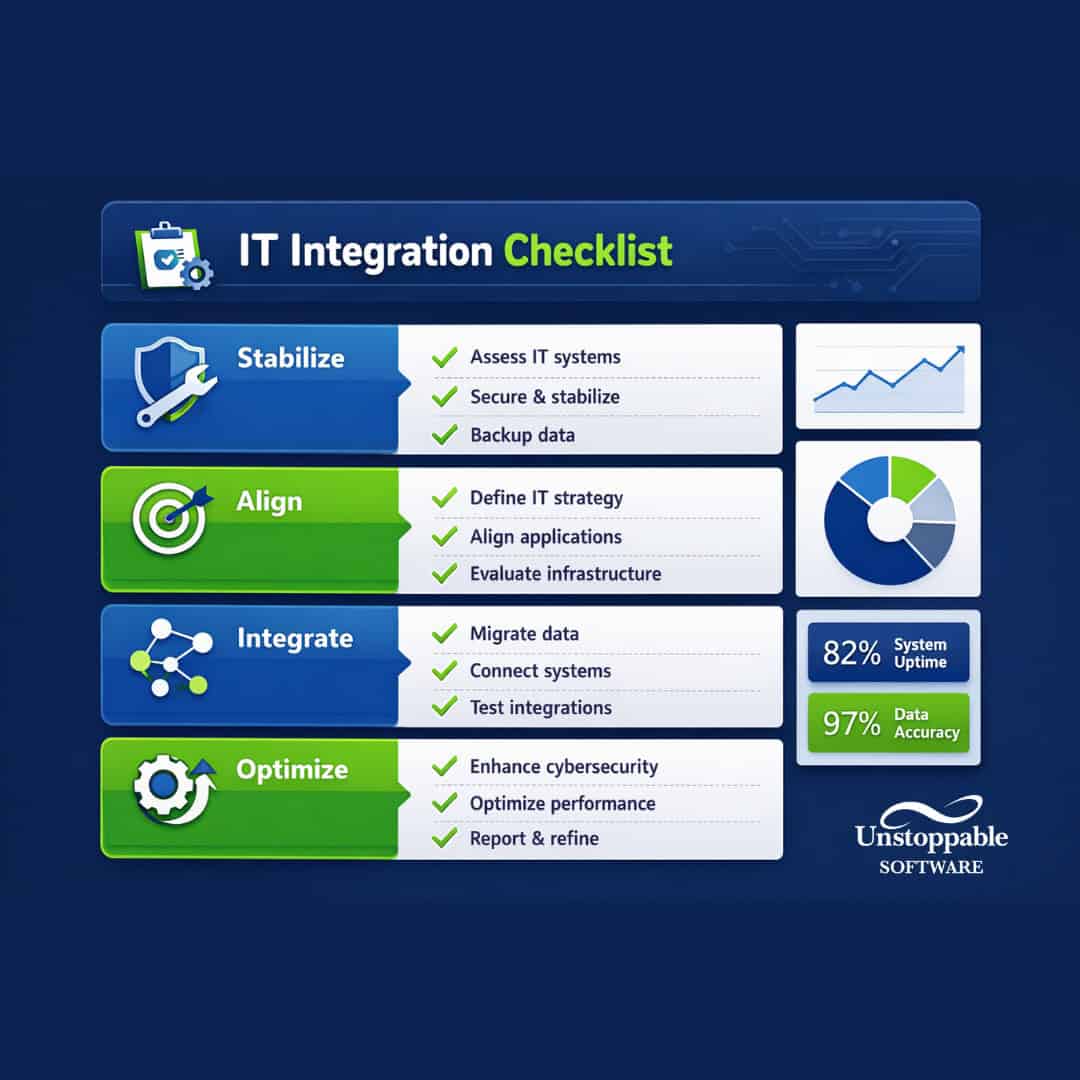
A practical IT integration checklist ensures nothing is missed.
| Phase 1: Stabilize – Secure critical systems – Ensure operational continuity – Backup key data |
| Phase 2: Align – Map systems across both companies – Define integration priorities – Align workflows |
| Phase 3: Integrate – Connect systems through APIs – Execute a strong data migration strategy – Test integrations |
| Phase 4: Optimize – Improve performance – Strengthen cybersecurity in M&A – Refine reporting |
Data Migration Strategy for Manufacturing Systems
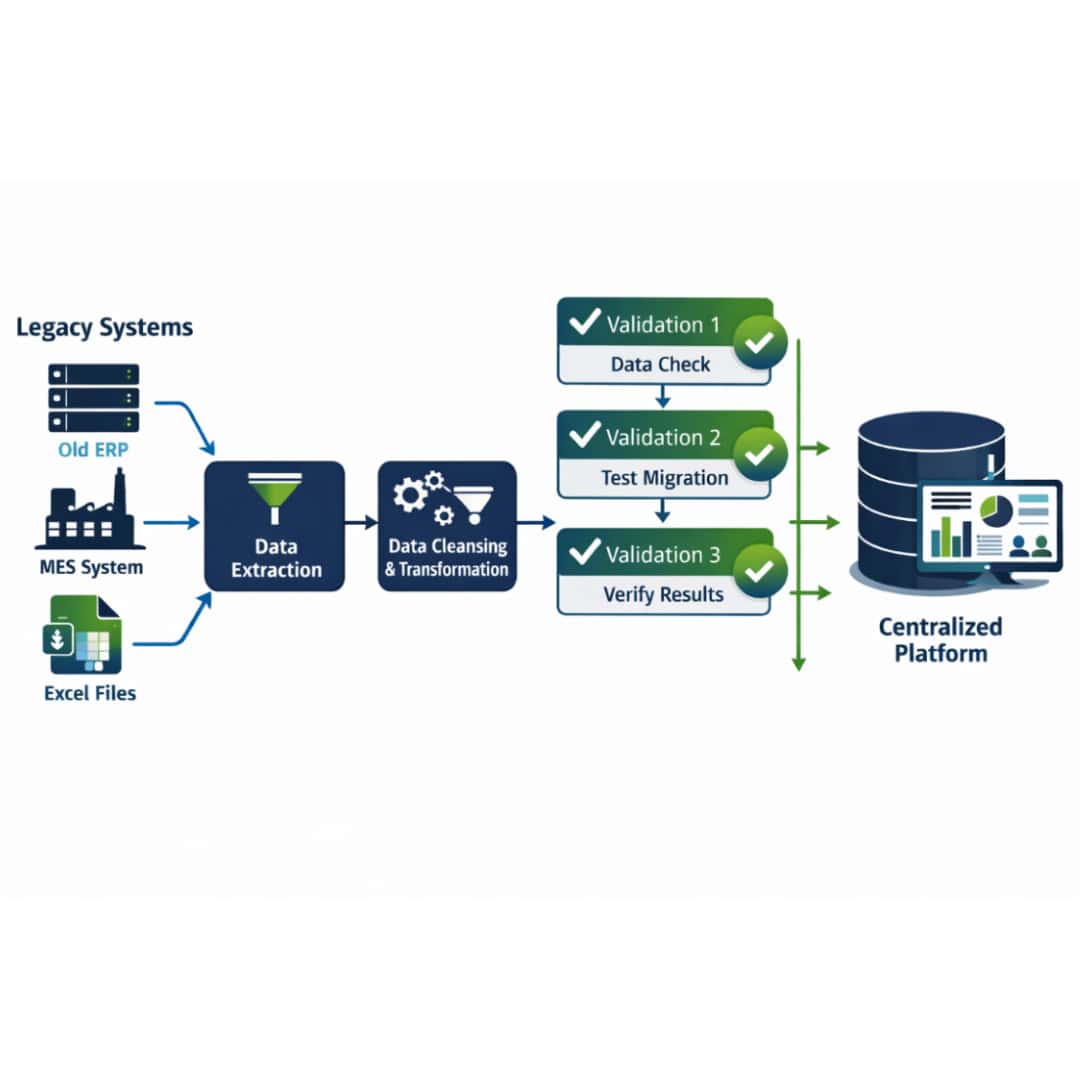
A solid data migration strategy is where integration either succeeds or fails.
Poor execution leads to:
- broken reports
- lost data
- operational disruption
A strong approach includes:
- cleaning and structuring data before migration
- validating data during transfer
- testing outputs against real workflows
Cybersecurity in M&A
During integration, companies are more exposed than usual.
That’s why cybersecurity in M&A should be part of the process from day one.
Common risks include:
- over-permissioned users
- unsecured integrations
- outdated systems
Security isn’t just protection. It protects the value of the deal.
Common IT Integration Risks in M&A
Even well-planned integrations fail when execution breaks.
Common issues include:
- underestimating system complexity
- relying on manual processes
- poor data quality
- lack of integration ownership
How to Actually Get IT Integration Right
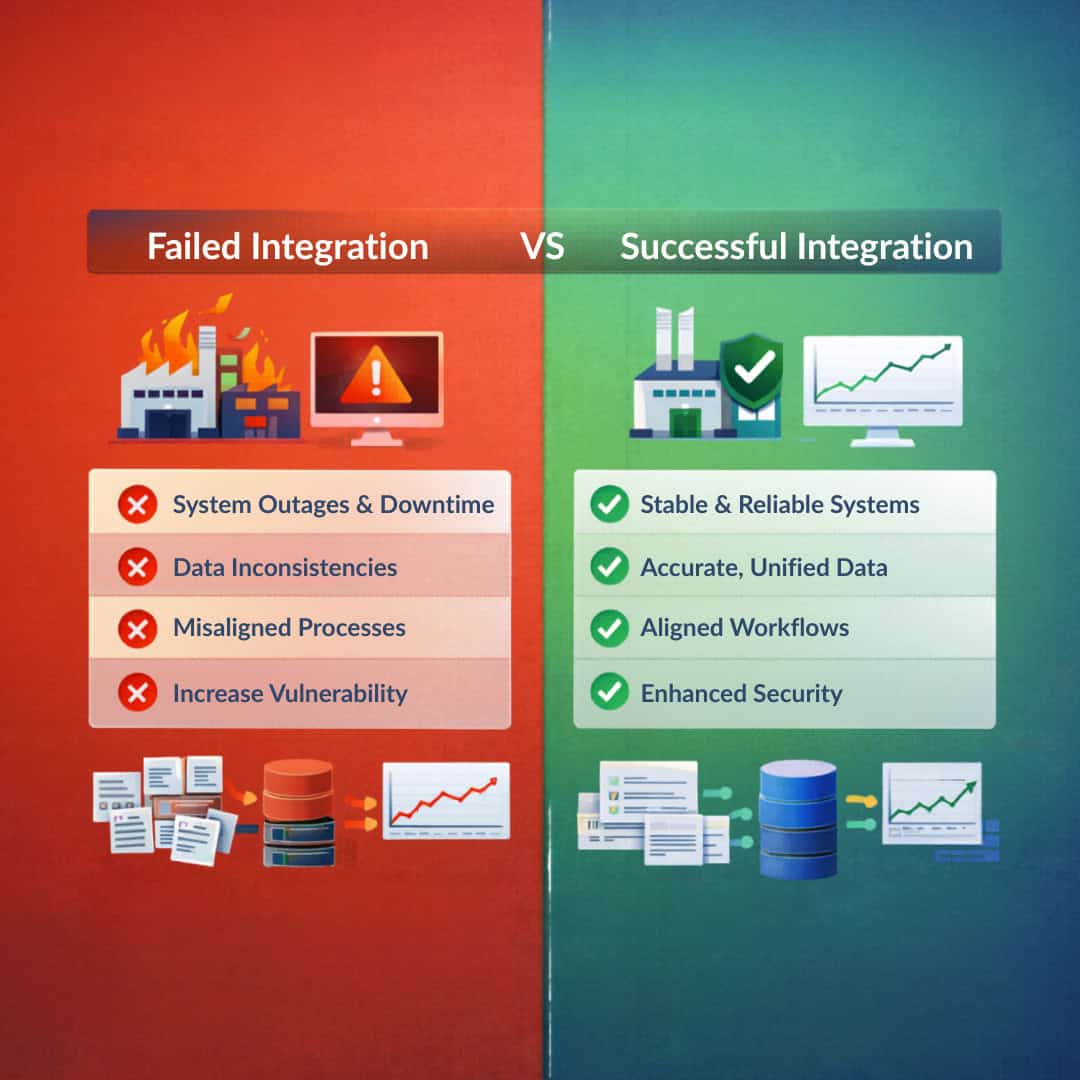
The goal isn’t to replace everything.
It’s to connect systems and make them work together.
That’s the difference between operational chaos and scalable growth.
A strong IT system integration approach focuses on:
- connecting legacy systems
- creating a single source of truth
- automating workflows
Where Unstoppable Fits In
This is where most teams hit a wall.
They know their systems are disconnected. They know integration is critical. But they don’t have the internal resources to execute it properly.
| Unstoppable Software focuses on solving exactly this. We build custom solutions that:
|
Turning IT due diligence into real operational results.
| Final Takeaway M&A success in manufacturing isn’t just financial. It’s operational. And operations run on systems. If you get IT due diligence, IT system integration, and data migration strategy right, you create a foundation for growth. If you don’t, integration becomes the bottleneck. |