
Most manufacturing mergers do not fail because of the deal itself. They fail because systems stop working together.
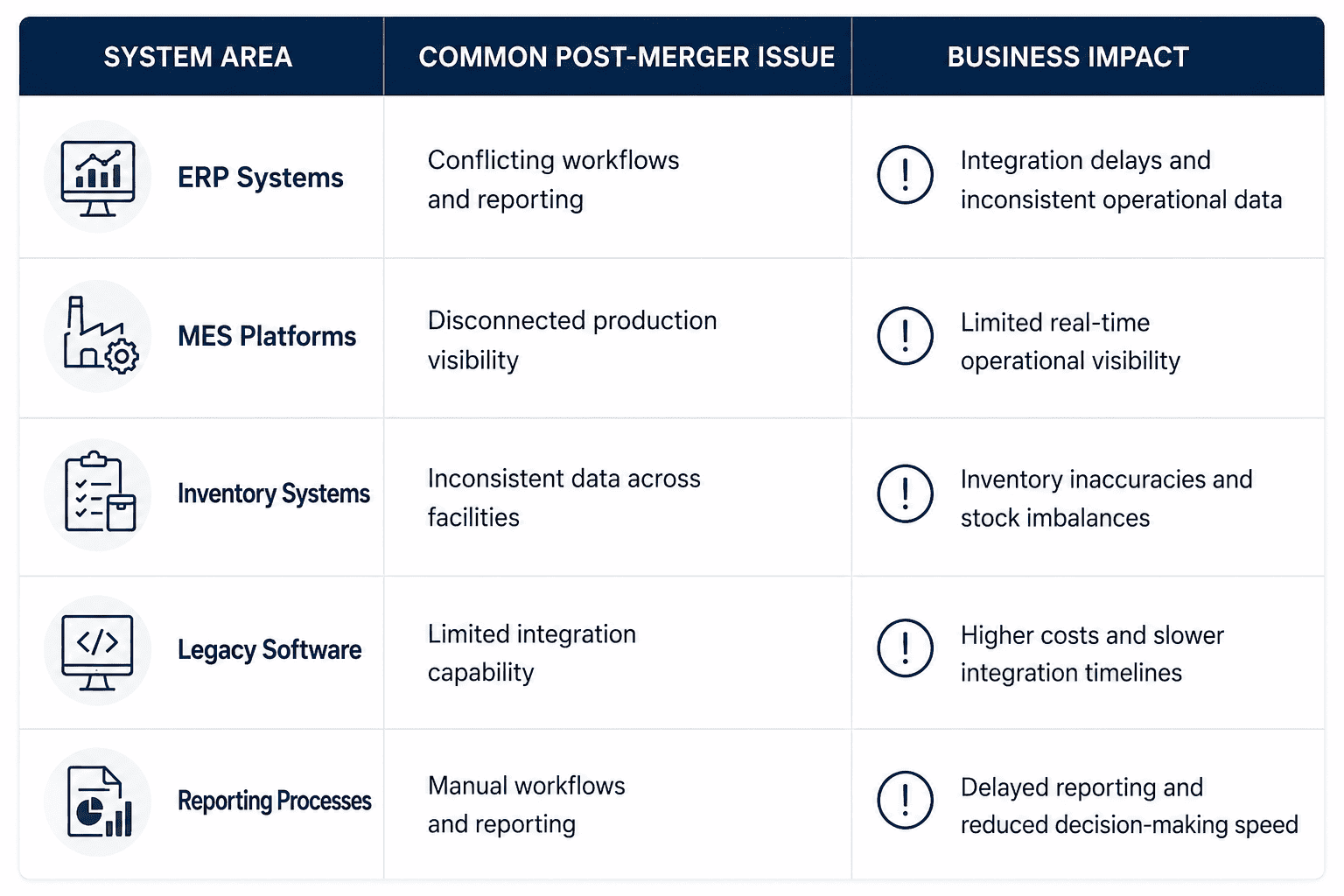
After an acquisition, disconnected ERP systems, production software, spreadsheets, and operational workflows can quickly create bottlenecks across the business. This is why post-merger IT integration is such a critical part of manufacturing M&A. Without a clear IT system integration strategy, manufacturers often face inconsistent reporting, disconnected workflows, cybersecurity risks, and limited operational visibility.
Successful integration requires strong IT due diligence, a practical data migration strategy, and systems that can support long-term operational growth.
Why Post-Merger IT Integration Becomes a Manufacturing Bottleneck
One of the biggest issues we see after manufacturing mergers is disconnected systems. Most manufacturers are already operating with a mix of ERP platforms, production software, spreadsheets, and custom workflows, and after an acquisition, that complexity increases fast.
Instead of improving operational visibility, manufacturers often end up dealing with:
- fragmented reporting
- disconnected workflows
- inconsistent operational data
- increased manual work
A lot of manufacturers underestimate how dependent operations are on system connectivity until integration begins affecting day-to-day operations.
What IT Due Diligence Should Reveal Before Integration
This is where IT due diligence becomes critical.
One of the biggest mistakes companies make after a merger is assuming systems will integrate more easily than they actually do. In reality, most manufacturing environments have years of customized workflows, disconnected reporting structures, and operational dependencies that are not obvious at first glance.
A strong IT due diligence process helps manufacturers evaluate:
- how systems connect
- where operational dependencies exist
- which workflows are fragile
- where security risks are present
- how scalable current infrastructure actually is
Without that visibility, integration becomes guesswork.
What Manufacturers Should Prioritize After a Merger
One of the biggest mistakes manufacturers make after an acquisition is trying to integrate everything at once. Successful integrations usually start with visibility. Before companies modernize systems or automate workflows, they need to understand which systems are business-critical, where operational dependencies exist, and which workflows cannot tolerate downtime.
The challenge is not simply deciding what to replace, but understanding what actually creates operational value.
Using the Gartner TIME Model to Evaluate Systems After a Merger
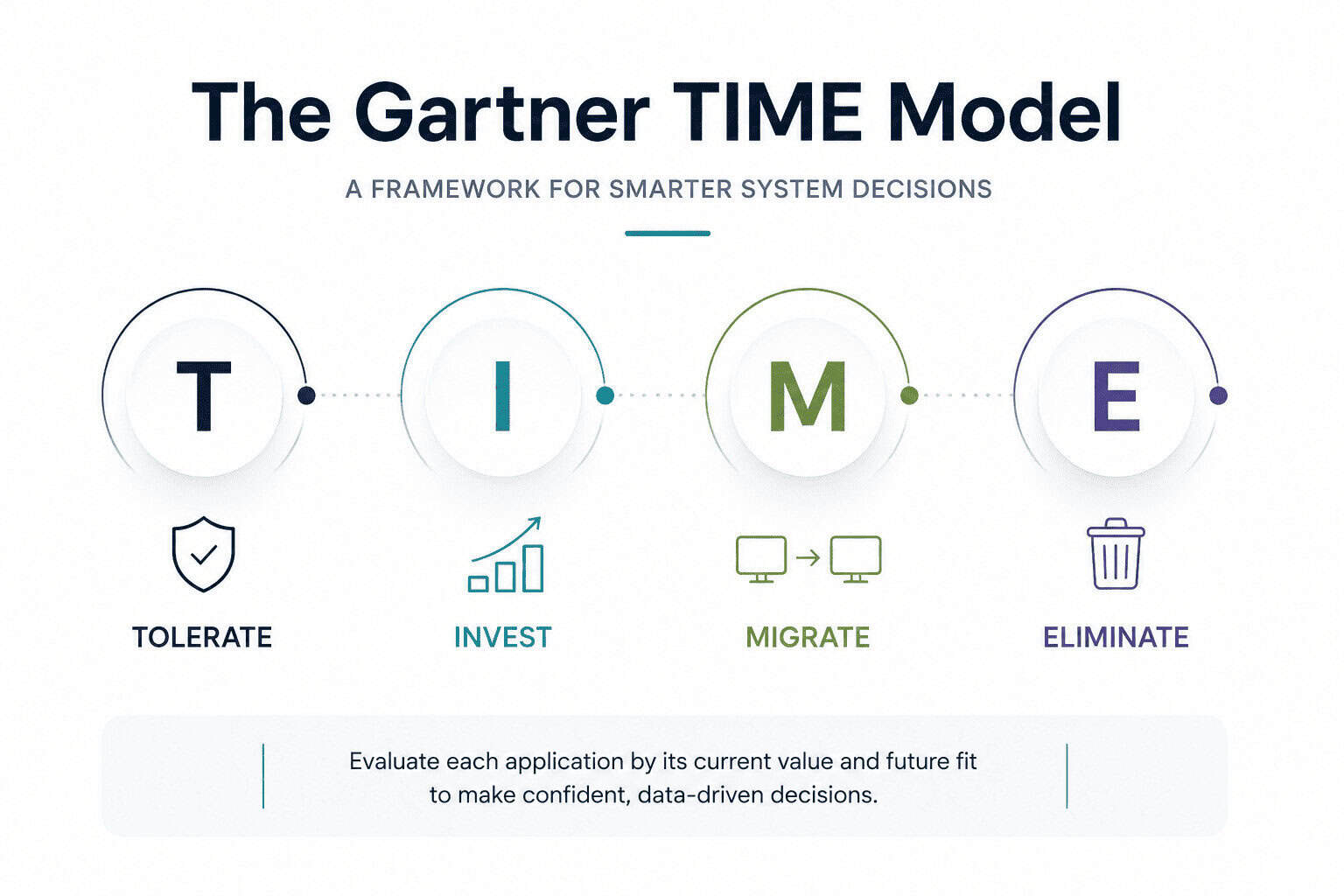
After a merger, one of the biggest challenges is deciding which systems still create operational value and which ones are creating friction.
This is where the Gartner TIME model becomes useful.
It helps manufacturers evaluate which systems should be tolerated, invested in, migrated, or eliminated based on operational impact and long-term scalability.
We talked more about this in our blog on software portfolio management and the Gartner TIME model.
Why Data Visibility Matters After a Merger
One of the biggest operational problems after a merger is inconsistent data across systems.
When reporting structures, production metrics, and workflows are not aligned, teams lose visibility into how operations are actually performing. Manufacturers often begin dealing with:
- conflicting reports
- duplicated operational data
- inconsistent production metrics across facilities
This is why a strong data migration strategy matters so much during integration. The goal is not just moving data between systems, but creating operational visibility teams can actually trust.
Why Cybersecurity Often Gets Overlooked During Integration
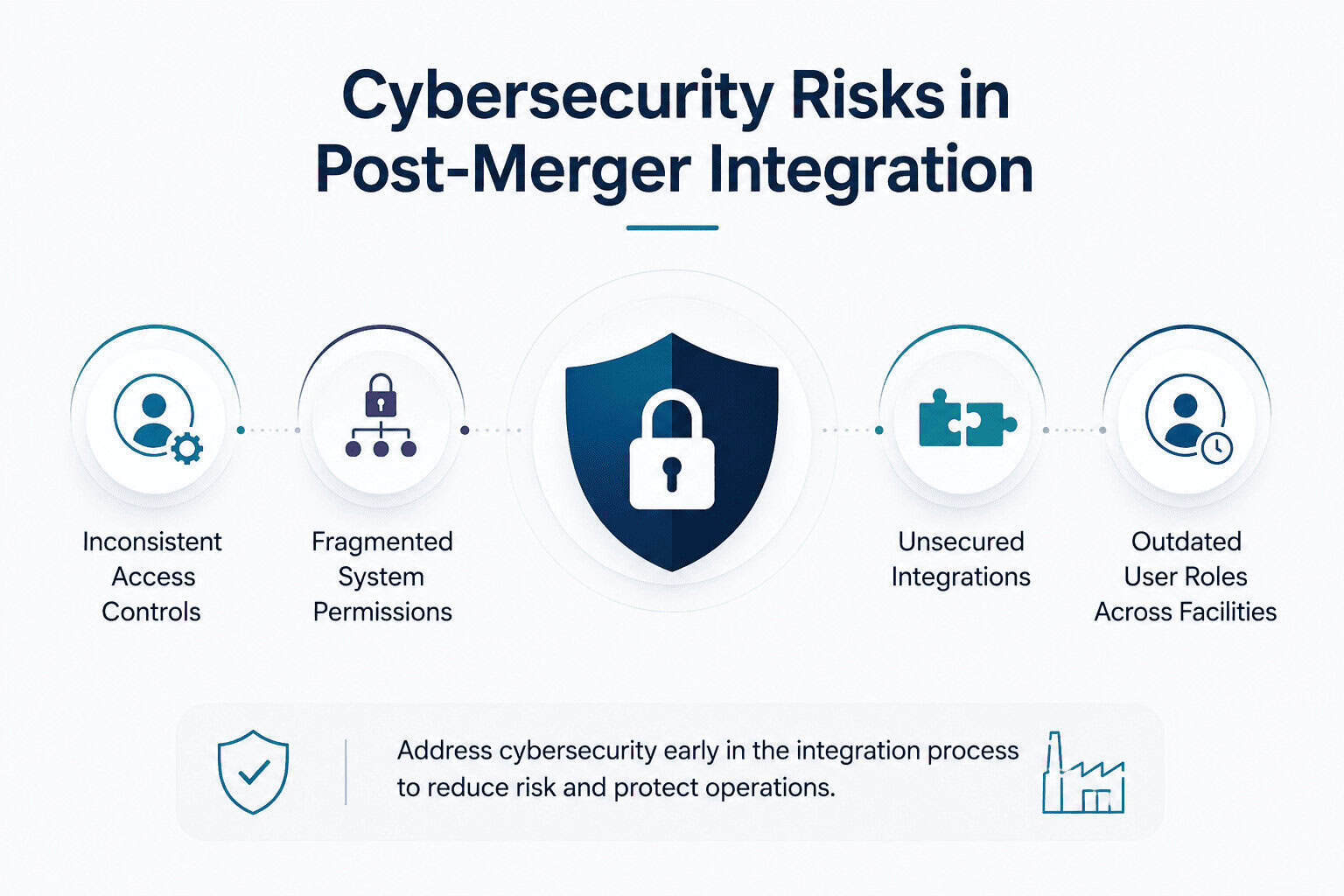
When manufacturers focus on integrating systems after a merger, security gaps are often created without teams realizing it.
Different access policies, disconnected platforms, outdated permissions, and rushed integrations can quickly increase operational risk across the business. Manufacturers commonly begin dealing with:
- inconsistent access controls
- fragmented system permissions
- unsecured integrations
- outdated user roles across facilities
This is why cybersecurity in M&A should be part of the integration strategy from the beginning, not something addressed after systems are already connected.
Building Systems That Can Scale After a Merger
Post-merger integration is not just about connecting systems. It is about building an operational environment that can actually scale.
At Unstoppable Software, we help manufacturers improve operational visibility, connect disconnected systems, and build workflows designed for long-term growth.
| FINAL TAKEAWAY |
|---|
Successful manufacturing mergers are not just about combining systems. They are about creating operational alignment across workflows, reporting, and production environments. The manufacturers that scale successfully after a merger are usually the ones whose systems actually work together. |