
If your manufacturing software still works, why replace it?
It’s a reasonable question. Replacing a system that’s been running production for years can be expensive, disruptive, and difficult to justify.
But I’ve seen how the cost of keeping outdated software can be just as significant. Employees spend hours on manual workarounds, integrations become harder to maintain, and simple process improvements turn into complicated projects.
This is technical debt, and it’s often costing manufacturers more than they realize.
The challenge isn’t necessarily replacing every legacy system. It’s understanding where technical debt is affecting operations and making smart decisions about what to modernize first.
What Is Technical Debt in Manufacturing?
Technical debt is what happens when technology decisions that solve an immediate problem create additional costs or limitations over time.
In manufacturing, this often shows up in systems that have been modified, patched, or connected through temporary workarounds for years.
Think about an ERP that requires manual data entry because it can’t communicate with production equipment, or a custom application that only one employee knows how to maintain. These systems may still perform their original functions, but keeping them running becomes increasingly complicated.
One thing I think is important to understand is that legacy software isn’t automatically technical debt. Some older systems are reliable and continue to meet business needs.
The problem starts when maintaining those systems takes more time, money, and effort than it should, or when their limitations prevent manufacturers from improving operations.
The Hidden Costs of Technical Debt in Manufacturing
Technical debt doesn’t always appear as a line item in the IT budget. More often, its costs are spread across production, maintenance, and everyday operations.
A system might still be doing its job, but the work required to keep everything running around it can become increasingly expensive.
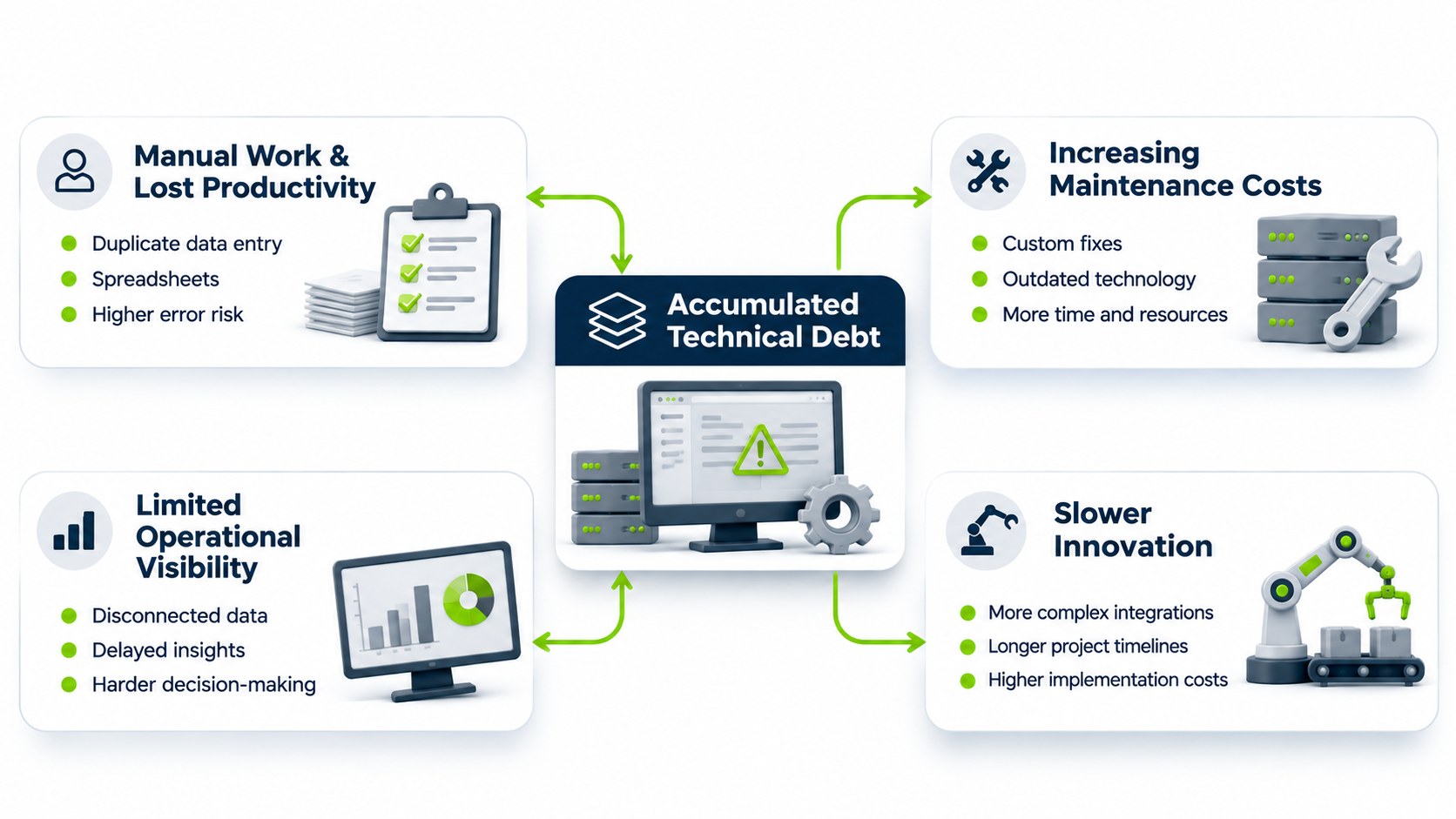
Here are four areas where manufacturers tend to feel the impact.
1. Manual Work and Lost Productivity
When an ERP can’t communicate directly with production systems, someone has to bridge that gap.
Operators may record production quantities on paper, supervisors transfer those numbers into spreadsheets, and office staff enter the same information into the ERP.
Beyond the time lost, every manual handoff creates another opportunity for errors, missing records, or delayed inventory updates.
2. Increasing Maintenance Costs
Legacy software often depends on custom code, outdated technologies, or a small number of people who understand how everything works.
What should be a minor update can require hours of troubleshooting, especially when changing one component affects several others.
The real concern isn’t simply paying to maintain older software. It’s reaching a point where routine fixes consume resources that could be spent improving operations.
3. Limited Visibility Into Operations
Imagine discovering an inventory discrepancy only after a production order has been delayed.
When material consumption, inventory records, and production data aren’t properly connected, teams may not recognize inconsistencies until they affect scheduling or purchasing decisions.
Manufacturers need reliable information while there’s still time to act, not after someone has finished reconciling multiple reports.
4. Slower Innovation and Modernization
Let’s say a manufacturer wants to automate quality checks or connect a new piece of equipment to its MES.
The technology itself might be straightforward. The challenge comes when existing applications lack modern interfaces, use proprietary data formats, or depend on integrations that are difficult to modify.
Before the improvement can even begin, the team may need to build additional connections, clean up old code, or address years of accumulated workarounds.
That’s one of the most overlooked costs of technical debt: it makes future improvements more expensive and time-consuming than they need to be.
The goal isn’t to eliminate every legacy system. It’s to identify which limitations are creating real operational costs and address those first.
How to Identify Technical Debt in Your Manufacturing Systems
Technical debt isn’t always obvious, especially when employees have spent years working around system limitations.
One warning sign is when simple improvements, like adding a production report or connecting new equipment, require extensive development.
Another is when critical processes depend on spreadsheets, outdated integrations, or a single person who understands how the system works.
I’d also pay attention to how often teams avoid improving workflows because changing the software seems too complicated.
These issues don’t necessarily mean a system needs replacing. The key is identifying where technical debt creates operational risks and prioritizing improvements based on their impact on the business.
How to Modernize Legacy Software Without Disrupting Production
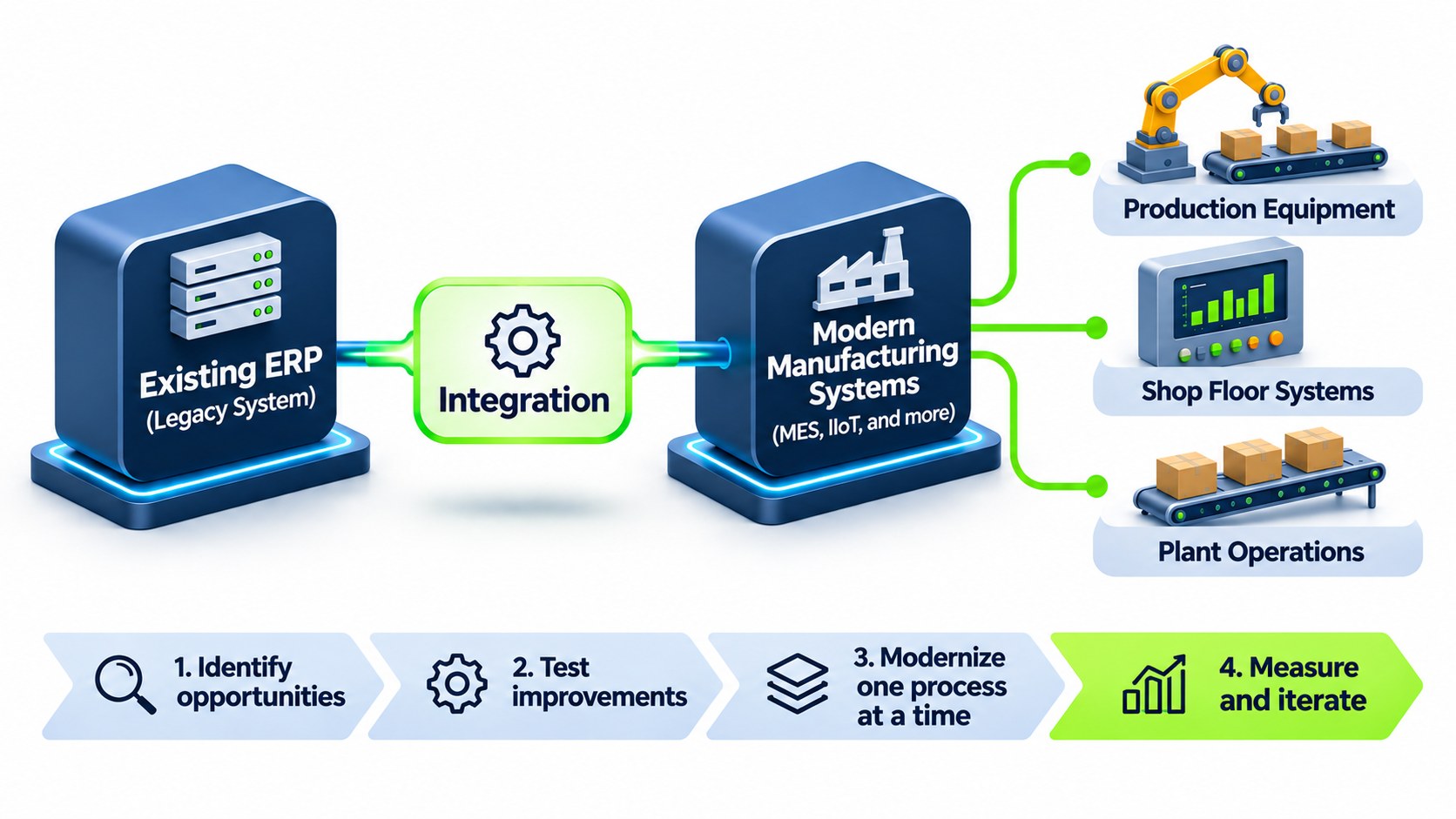
Modernizing legacy software doesn’t mean replacing everything at once. The key is identifying which systems need improvement and making changes without putting production at risk.
For example, if an older ERP works well but can’t communicate with production equipment, a custom integration may be more practical than replacing the entire system.
I’d recommend testing improvements before deployment, modernizing one process at a time, and measuring the results.
The goal is to reduce technical debt while keeping reliable systems running and minimizing operational disruptions.
When Should Manufacturers Replace Legacy Software?
The decision to replace legacy software should be based on its business impact, not its age.
I’d consider replacement when maintenance costs keep increasing, security risks become difficult to manage, or the system can no longer support essential business processes.
Before committing to replacement, I’d compare the long-term cost of maintaining and integrating the system with the cost and risk of migrating to a new one.
The decision should come down to operational impact, long-term costs, and business priorities, not simply how old the software is.
Where Unstoppable Fits In
At Unstoppable Software, we help manufacturers reduce technical debt by modernizing legacy applications, improving system integrations, and developing custom software solutions.
Our focus is on solving operational challenges while making the most of the technology manufacturers already have.
Need help reducing technical debt in your manufacturing systems? Let’s talk.